Every truck loading operation depends on safe, reliable access for workers who service tanks and hatches. Fall risks increase whenever personnel climb ladders or improvise access to elevated areas. A portable access platform offers one way to reduce that risk, but it may not always be the right fit.
Every site has different needs, and the right answer depends on your specific operation. Picking the right setup means weighing your budget, space, and daily loading demands. Read on for practical guidance to help your operation choose the safest option available.
What is a Portable Access Platform?
A portable access platform is a mobile system that gives workers safe access to elevated points on a truck. Unlike fixed installations, it can move freely between loading spots as your operations require. Many facilities use portable platforms to reach hatches, valves, and sampling ports without climbing directly onto the vehicle.
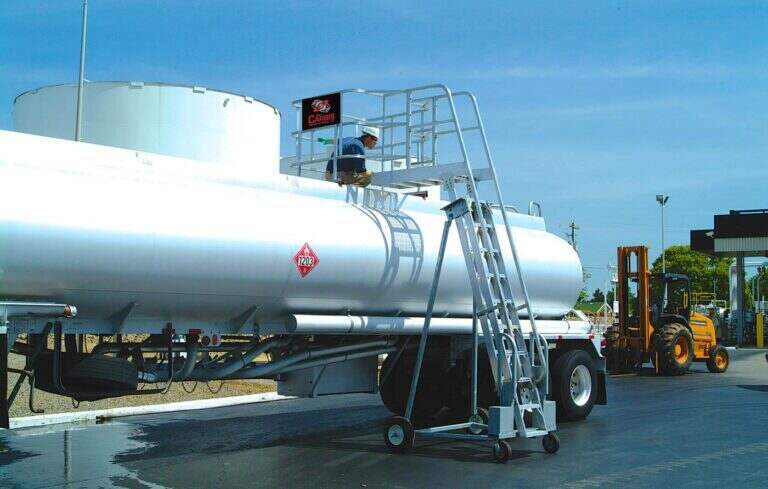
Portable platforms handle several key roles in everyday truck loading operations across many industries. Each role addresses a specific safety concern or workflow need at your facility.
- Hatch and Valve Access. Workers reach tank hatches and valves safely during product transfer.
- Sampling and Inspection. Operators sample product quality without climbing directly onto the truck.
- Multi-Vehicle Flexibility. Platforms move between loading bays to serve different trucks throughout the day.
- Temporary Site Coverage. Platforms fill gaps in areas where permanent structures are not yet installed.
Such mobility makes portable platforms a practical choice for sites with limited space. Many safety teams rely on portable systems specifically for this kind of operational flexibility.
When to Choose a Portable Access Platform
Every facility faces different loading conditions, and no single solution fits every situation. Choosing the right setup protects your workers and keeps daily operations running smoothly. The scenarios below outline situations where a portable access platform becomes the more practical choice for your operation.
Truck Sizes and Heights Vary
Many fleets often include trucks and tankers with different heights and hatch positions. The Occupational Safety and Health Administration (OSHA) identifies loading and product transfer operations as among the most hazardous tasks at industrial sites. Portable systems adapt to each truck, keeping site personnel at a safe access height every time.
Loading Locations Change or Aren't Fixed
Some operations load trucks from multiple bays or shift locations based on demand. A fixed structure limits you to one spot, which can slow down operations. Comparing a fixed vs portable gangway helps you decide which setup matches your workflow.
Space is Limited
Tight yards and crowded docks often leave very little room for permanent installations. Portable platforms take up less space and store away when not in use. Facilities working within a compact footprint often find portable platforms a strong option.
Operations Need a Fast, Temporary Fix
Sometimes a permanent platform is under repair or a new site is not ready yet. Workers still need safe access during that gap, without delays to loading schedules. Reviewing common safety gaps at loading platforms explains why closing this gap matters.
Budget Doesn't Support a Permanent Installation Yet
Capital projects often require lengthy approval cycles that take several months to complete. A portable platform lets you protect your personnel now while budget planning continues. You can keep operations safe without waiting on a large capital expense.
Operations Are Growing or Still Uncertain
Growing operations often do not know their final loading volume or layout yet. A portable platform lets you scale access without committing to a permanent structure. Learning about designing safer access for tank truck loading helps you plan for future growth.
Signs a Portable Platform is Not Enough
A portable access platform solves many access challenges, but it does not fit every operation. Some sites face conditions where a permanent structure delivers far better long-term value. Recognizing these signs early helps you plan the right access solution from the start.

A few signs suggest a fixed platform might serve your operation better than a portable one.
- High, Repeated Volume. Sites loading the same trucks daily may benefit more from a fixed platform.
- Uniform Vehicle Types. Facilities using trucks of the same height rarely need the adjustability portable systems offer.
- Integrated Loading Equipment. Sites that integrate fixed loading arms or hoses often require a permanent structure.
- Year-Round Weather Exposure. Enclosed, permanent platforms provide better year-round weather protection than portable systems can offer.
- Long-Term Site Stability. Facilities with a stable layout and available budget may find fixed platforms more practical.
Every operation has unique demands, so weighing your options carefully matters before committing to either path. An experienced team can help you evaluate your site and match the right equipment to your needs.
Partner With Us for Access Solutions
Choosing between a fixed and portable access platform depends on your trucks, space, and daily loading demands. At Carbis Solutions, we design access systems built specifically around your operation and its needs. Our team offers both portable and permanent platforms, along with site assessments and engineering support.
We work with you from the first conversation through installation and ongoing field support. You avoid guesswork this way, choosing equipment that keeps your workers safe for years. Contact our team today to find the right access solution for your operation.