Certain challenges show up at almost every loading site, regardless of industry. The equipment may vary, but the underlying risks are often the same. Vehicle access platforms are built to address that pattern directly.
Recognizing these patterns is the first step toward addressing them. This article breaks down four specific ways vehicle access platforms tackle these recurring loading challenges.
Platform Access Reduces Manual Handling and Worker Fatigue
Loading tasks put heavy physical demands on workers. Reaching a hatch or connecting hoses often means climbing, twisting, or lifting in awkward positions. Doing this manually, shift after shift, can wear the body down over time.
This level of overexertion can cost employers more than $13 billion a year due to injuries, according to Liberty Mutual's 2026 Workplace Safety Index. Vehicle access platforms remove much of that burden by providing the following:
- Level walkways eliminate repetitive climbing. Workers reach the hatch without climbing ladders or scaling equipment. Removing that vertical movement cuts fatigue over a full shift.
- Stable platforms provide secure footing for lifting. A fixed, level surface lets workers keep proper posture while handling hoses or tools. This reduces the back and shoulder strain that comes from lifting on unstable ground.
- Direct hatch access shortens awkward reach. Workers can get closer to the connection point without having to stretch or lean. Less reaching means less strain on the joints over repeated cycles.
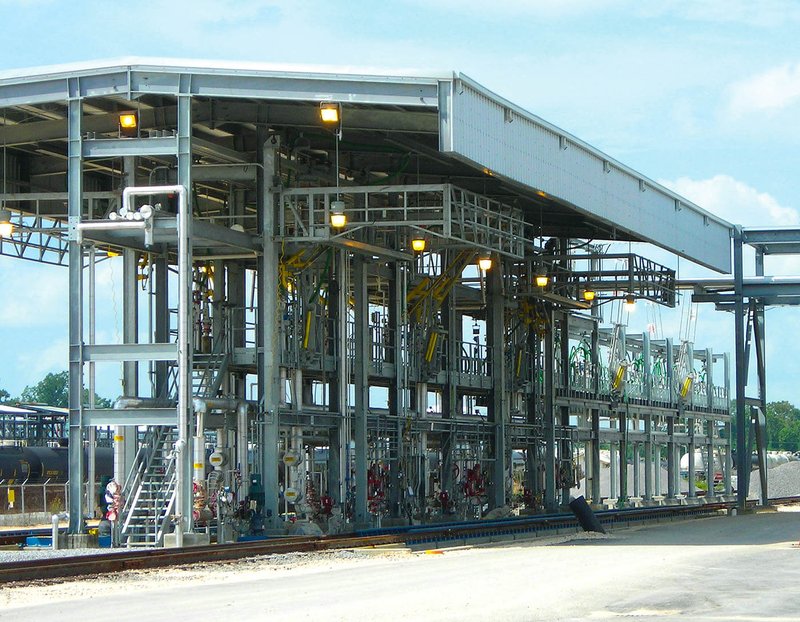
Fatigue rarely causes a single incident. It builds gradually and raises the odds of a mistake later in the shift. Many of these access safety challenges trace back to physical demands, making reduced manual handling one of the clearest ways to improve safety at the rack.
Adjustable Vehicle Access Platforms Handle Truck and Rail Car Variation
Most sites handle more than one type of vehicle. Truck heights differ by model, and rail cars vary by design and hatch placement. A platform built for only one configuration can quickly become a bottleneck.
Vehicle access platforms solve this by adjusting within their vehicle type instead of assuming a single fixed profile. That flexibility keeps access safe and consistent as vehicles change.
These platforms handle variation in a few specific ways.
- Adjustable height matches different vehicle profiles. Platforms raise or lower to meet each vehicle at the correct level. This keeps the connection point stable across different trucks or rail cars.
- Multi-spot configurations serve several hatch positions. One platform setup can reach hatches in different locations without repositioning. This cuts down on delays caused by mismatched equipment.
- Modular designs adapt to changing fleet needs. Sites rarely load the same single vehicle configuration forever. Platforms built for flexibility keep working as that mix shifts.
Choosing the right access solution starts with understanding this variation. A platform that adjusts to the vehicle, rather than the other way around, keeps loading operations safer and more predictable.
Better Alignment Reduces Misspotting Incidents
Vehicles do not always stop in the exact spot a loading rack expects. Misspotting happens when a truck or rail car lines up incorrectly during product transfer. Even a small misalignment can require the driver to reposition the vehicle before they can resume work.
Vehicle access platforms address this by helping drivers align correctly on the first attempt. Better alignment cuts down on repositioning and the delays that come with it.
Better alignment comes from a few specific features:
- Visual spotting guides simplify positioning. Clear markers help drivers judge distance and angle before stopping. This reduces the guesswork that leads to misalignment.
- Spotting systems confirm correct placement. Sensors or indicators signal when a vehicle reaches the right spot. Drivers get immediate feedback instead of relying on estimation alone.
- Consistent stopping points reduce repeat attempts. Once a vehicle is properly aligned, the platform connects the same way every time. This limits the back-and-forth adjustments that slow down a shift.
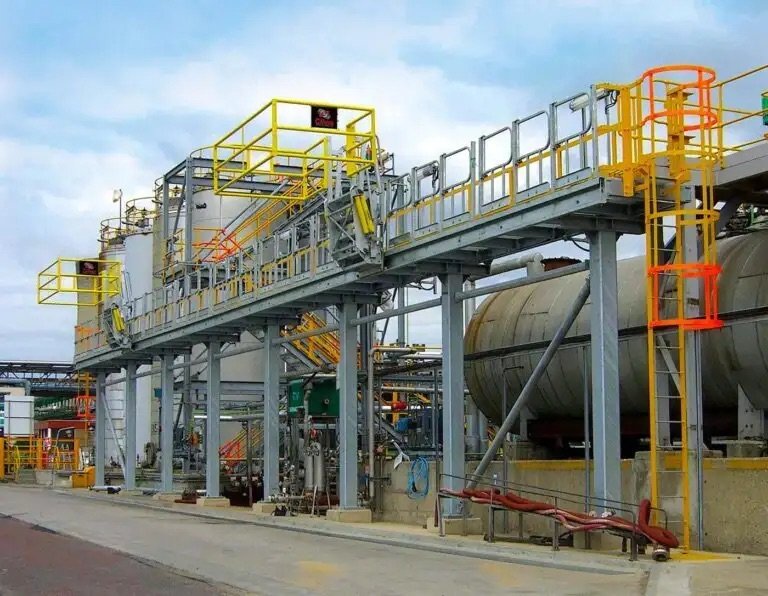
Misspotting rarely causes a major incident on its own, but it adds friction to every load. Reducing it keeps loading racks moving without introducing unnecessary risk.
Enclosed and Guarded Designs Mitigate Weather-Related Fall Risk
Working at height gets riskier once weather enters the picture. Rain, ice, and wind all reduce footing and visibility during a shift. Risks during top loading tasks increase significantly under these conditions.
Vehicle access platforms address this with enclosed and guarded designs. These features keep workers protected regardless of what the weather brings.
This protection comes from a few specific design elements.
- Guardrails prevent falls in low-visibility conditions. Rails stay in place whether or not weather affects a worker's footing. This adds a consistent layer of protection during every shift.
- Enclosures shield workers from wind and precipitation. Covered platforms reduce exposure to conditions that make surfaces slick. Drier, more stable footing lowers the chance of a slip.
- Non-slip surfaces improve traction in wet conditions. Textured or grated flooring keeps workers steady even when platforms get wet. This matters most during sudden weather changes mid-shift.
Weather is one variable no site can control. Platforms built to handle it keep loading tasks safer, regardless of the forecast.
Overcome Loading Challenges with the Right Vehicle Access Platforms
Getting loading access right changes what a shift actually looks like. Workers move with less strain, vehicles connect faster, and weather stops being a factor that slows things down. That comes from choosing equipment built for how loading racks actually operate.
At Carbis Solutions, we design and build vehicle access platforms suited to the specific demands of your site. Our team works with you from initial assessment through installation to make sure the solution fits your operation. Reach out to us today to learn more about the products and services we offer.