Workers walk the same routes every shift to check valves, gauges, and hatches. These routine checks catch small issues before they turn into bigger problems. Doing this safely, day after day, depends on having the right maintenance platform in place.
Maintenance itself ranges from quick inspections to hands-on repairs. Both require stable, secure footing above ground level rather than a ladder propped against equipment. This article covers the signs that call for a dedicated platform, the equipment involved, and the risks of relying on temporary access.
Signs You've Outgrown Ladders or Portable Steps
Ladders and portable steps give workers quick access to equipment that sits above ground level. They work well for occasional tasks, spot checks, or one-off repairs. Choosing between fixed ladders and portable ladders often comes down to how often that access point gets used and how permanent the setup needs to be. In some cases, though, what starts as occasional access turns into a daily routine.
Watch for the following signs that ladders or portable steps are no longer enough:
- Frequent Access Points. Workers return to the same valve, hatch, or gauge multiple times per shift. This kind of repeated access adds up fast and increases exposure to fall risks.
- Extended Time at Height. Tasks that once took seconds now take minutes. Ladders were not built for extended time spent standing above ground.
- Multiple Workers Needing Access. More than one person needs to reach the same equipment. Ladders and portable steps cannot support that kind of shared, simultaneous access.
- Near Misses or Incidents. Slips, wobbles, or close calls start showing up in incident reports. These moments often signal a bigger problem with how access is set up.
- Inconsistent Footing. Ground conditions shift with weather, spills, or uneven surfaces. Ladders require a stable base that is not always available.
These signs rarely show up all at once. Even one appearing on a regular basis is worth addressing. At that point, a fixed maintenance platform is a safer long-term option than another temporary fix.
Equipment and Access Points that Need a Maintenance Platform
Different types of equipment create different access challenges. Some require access at a single fixed point. Others require access across a larger structure. The equipment involved often determines whether a maintenance platform is the right solution.
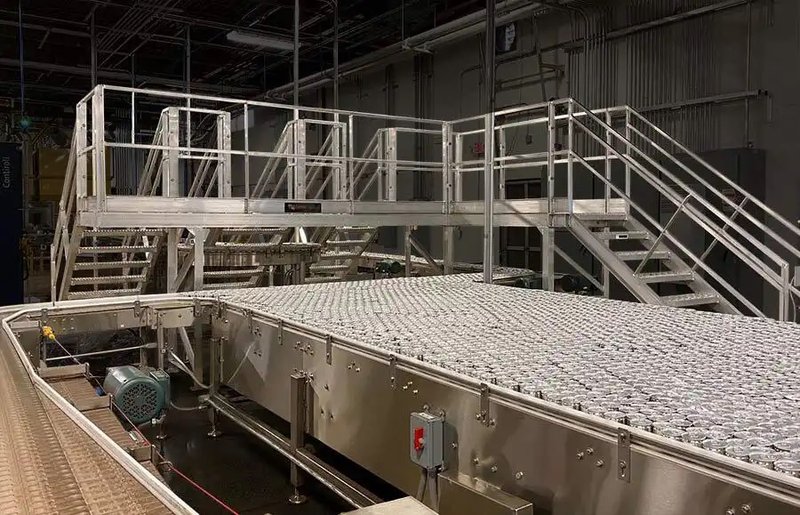
Here are common equipment types and access points that typically call for one:
- Truck and Rail Hatches. Hatches sit at awkward heights on top of trucks and rail cars. Workers need a stable way to access them repeatedly for opening, inspection, and closing.
- Tank Domes and ISO Containers. These structures often require access from multiple angles. Their height and shape can make ladders difficult to position safely.
- Flatbed Trailers. Tarping and securing loads require workers to move across the trailer bed. Access for flatbed loading tasks calls for platforms built around that specific motion, not just a single fixed point.
- Rail Car Rooftops. Rooftops on tank cars and hopper cars require sustained access. Uneven surfaces and curved tops add to the risk of using ladders alone.
- Marine Vessels. Ships and barges present changing heights due to tides and loading conditions. Fixed ladders cannot adjust to that kind of movement.
Each of these access points comes with its own layout and risk factors. Matching the platform to the equipment matters as much as whether to have one at all.
The Risks of Foregoing Maintenance Platform Solutions
Skipping a dedicated maintenance platform does not remove the risk. It just shifts that risk onto workers and operations. Over time, those gaps tend to surface in costly ways.
Here are the main risks that come with relying on temporary access:
- Increased Fall Incidents. Ladders and improvised access points raise the chance of slips and falls. Reducing risks during top loading tasks often comes down to replacing that access with a stable platform.
- Compliance Exposure. The Occupational Safety and Health Administration (OSHA) requires fall protection on elevated walking and working surfaces four feet or higher. Falling short of the Walking-Working Surfaces standard puts operations at risk of citations and penalties.
- Slower Maintenance Cycles. Workers move more cautiously without stable footing. That extra caution can slow down tasks that should be quick and routine.
- Higher Long-Term Costs. Injuries, downtime, and repeated workarounds can add up. What looks like short-term savings often costs more over time.
- Lower Worker Confidence. Workers notice when their access setup feels unstable. That hesitation affects how consistently and safely tasks get done.

These risks tend to build gradually. Left unaddressed, they could surface at the worst possible time. Addressing access early keeps both workers and operations protected.
Matching a Maintenance Platform to Your Access Needs
Routine equipment access should never come down to a ladder and a hope for stable ground. The signs, equipment, and risks covered here all point to the same conclusion. Choosing the right maintenance platform protects workers and keeps operations running smoothly.
At Carbis Solutions, we design maintenance platforms built around how your team actually works. Our team also offers site assessments to match the right solution to your specific access points. Contact us to talk through your access needs and find the right fit.