A loading arm does more than move products from one point to another. It's a critical link between your process equipment and the trucks, railcars, or vessels you load. When it performs well, product transfer runs fast and safe for everyone involved.
But not all loading arms are built the same. Reach, materials, and configuration all affect how well an arm fits your operation. So, to help you understand these components, we’ll outline the features that shape loading arm performance, and what to look for when choosing one for your site.
Loading Arm Reach and Envelope
Reach determines how many compartments a loading arm can access without repositioning the vehicle. A well-designed arm covers the full loading envelope, which is the standardized area where couplers need to connect.
These characteristics directly affect how efficiently and safely a loading arm performs:
- Horizontal range. The arm should reach every compartment on a standard tanker without moving the vehicle. This keeps product transfer moving without interruption.
- Vertical flexibility. Drop-pipe length should adjust for different tank heights. This prevents strain on the arm and keeps connections secure.
- Full envelope coverage. Multiple arms should be spaced to cover the complete API envelope. This allows crews to load several compartments without delay.
Arms that fall short of this standard can require trucks to reposition mid-load. That adds time, strain on equipment, and risk to every product transfer.
Material Selection for Loading Arms
The material a loading arm is made from affects durability, safety, and performance over its lifespan. Different environments and products call for different properties, from corrosion resistance to weight. Choosing the right material upfront helps avoid costly replacements down the line.

Here's how common material options affect performance:
- Carbon steel. Offers strength and durability for standard applications. This makes it a reliable, cost-effective choice for many facilities.
- Stainless steel. Resists rust and corrosion in harsh environments. This extends service life in facilities handling corrosive products.
- Aluminum. Lightweight and corrosion-resistant. This makes it easier to maneuver in applications that need frequent repositioning.
- Special alloys. Built for unique operational demands. This gives facilities with specialized requirements a tailored solution.
The right material depends on the product you're handling and the conditions your equipment operates in. Getting this decision right up front protects both your investment and your workers.
Counterbalance, Swivel Joints, and Connection Points
The counterbalance, swivel joints, and connection points of a loading arm determine how smoothly the loading arm moves and how securely it connects. These components work together during every product transfer. When they perform well, workers can operate the arm with less physical strain and fewer safety risks.
Here's how each component affects daily performance:
- Counterbalance. A properly tuned counterbalance lets workers guide the arm with minimal effort. This reduces fatigue and speeds up connection time.
- Swivel joints. These allow the arm to move freely without kinking or restricting flow. This keeps products moving efficiently and prevents unnecessary wear.
- Connection points. Secure, well-maintained connections reduce the chance of leaks or disconnections during transfer. This protects both workers and equipment.
Worn or poorly adjusted components create more than a maintenance headache. They can also increase the physical demands placed on workers, which plays a role in reducing fall risk at loading areas.
Vapor Recovery and Crossover Configurations
Some operations require more than a standard loading arm setup. Vapor recovery and crossover configurations extend what a loading arm can do, supporting compliance needs and multi-product handling. Choosing the right configuration depends on what your facility loads and the frequency of product transfers.
Here's what to look for in these configurations:
- Vapor recovery. A good system captures vapor efficiently during product transfer instead of releasing it into the air. This keeps facilities aligned with environmental compliance requirements without slowing down operations.
- Multiple compartment loading. A well-designed setup lets crews load several compartments in one session. Fewer stops and restarts mean trucks spend less time at the rack.
- Crossover configurations. Staggered mounting is key to letting arms serve multiple products without interference. This gives facilities the flexibility to handle a wider range of materials using the same equipment.
Facilities that load varied products or must meet emissions requirements benefit most from these configurations. Matching the setup to your operation keeps product transfer efficient and compliant.
Compatibility With Fall Protection and Access Systems
A loading arm doesn't operate on its own. It works alongside gangways, platforms, and safety cages that give workers access to the truck or railcar. When these systems aren't designed together, gaps and mismatches can create unnecessary risk.
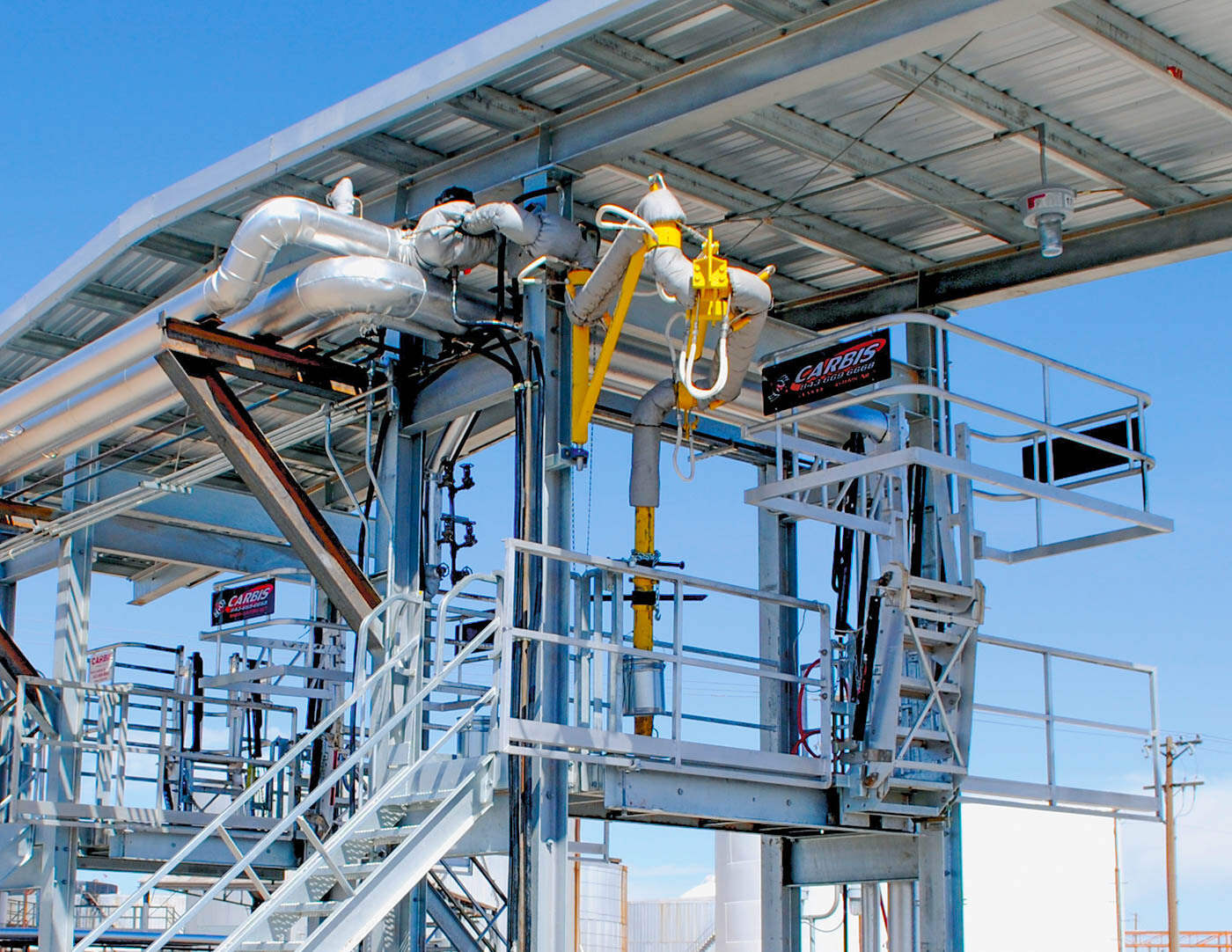
Here's what to look for when evaluating compatibility:
- Aligned positioning. The loading arm and access platform should line up so workers aren't reaching or stretching to make a connection. Poor alignment contributes to the safety risk of small access gaps between equipment.
- Coordinated design. Equipment designed as one system reduces awkward movements during setup and product transfer. This lowers strain on workers over repeated use.
- Shared engineering. Suppliers who design both loading arms and fall protection equipment can build systems that fit together from the start. This avoids the compatibility issues that come with mixing unrelated equipment.
Loading arms that work in step with your access equipment protect workers and simplify daily operations. That coordination matters as much as the performance of any single component.
Maintenance and Long-Term Reliability
Loading arms are a significant capital investment, and their value depends on how well they hold up over time. A well-designed arm is easy to maintain and built to perform consistently for years. That combination protects both your budget and the workers who use it daily.
Here's what to look for in terms of maintenance and longevity:
- Simple, accessible design. Components like counterbalance mechanisms and swivel joints should be easy to inspect and service. This keeps routine maintenance quick and reduces the chance of overlooked wear.
- Durable construction. Materials and build quality should hold up to daily use and site conditions. A durable arm resists wear longer, which means fewer part replacements over its lifespan.
- Manufacturer support. A supplier who understands your equipment makes long-term maintenance easier to manage. Reliable support also helps you plan ahead instead of reacting to breakdowns.
A loading arm built with these qualities in mind performs reliably for years. That reliability protects both your bottom line and the workers who depend on it daily.
Choose the Right Loading Arm for Your Operation
Performance comes down to how well each component works together, from reach and materials to maintenance. A loading arm built on these fundamentals keeps product transfer efficient and safe for years. That's the standard we hold every system to at Carbis Solutions.
We design loading arms alongside fall protection and access equipment, so every part of your system works as one. Our team supports you from early planning through installation and beyond. Get in touch with our team to find the right configuration for your site.