Not all standard access systems and fall protection equipment fit every site. Fixed dimensions and generic layouts often miss the mark on hatch heights, vehicle types, and site obstacles. That gap can leave workers exposed at the exact points where falls are most likely.
Custom access systems solve this by design. They reflect your facility's actual conditions, not a one-size-fits-all template. The result is safer, more reliable protection for workers at height.
This article breaks down why custom solutions work better and how to know if your facility needs one.
Common Problems with Standard Access and Fall Protection Systems
Standard access systems serve general use cases, not specific sites. This can create problems once they're installed in a working loading area. After all, every facility has its own vehicle types, hatch placements, and layout constraints. Generic equipment doesn't always account for these variables.
Equipment mismatches show up in predictable ways:
- Preset sizing. Standard gangways and platforms fit average vehicle heights. They may not adjust well to taller, shorter, or irregularly shaped trucks and railcars.
- Gaps at hatch access points. Hatch spacing varies by vehicle. Equipment that doesn't account for this can leave workers reaching or stepping across unprotected gaps.
- Poor fit with existing site equipment. Hoses, loading arms, and piping all take up space. Standard systems don't account for these obstacles, which can create pinch points or blocked pathways.
- Limited adaptability over time. As fleets or throughput needs change, fixed systems often can't scale with them, leading to costly rework down the line.
These issues aren't just inconvenient. They add up to real risk for workers at height. In 2024, 844 workers died from falls, slips, or trips on the job, according to the Bureau of Labor Statistics. That number points to a deeper issue: many standard systems simply don't fit the conditions they're used in.
The fix starts with designing safer access around each facility's actual layout, not a generic template. That shift in approach is where custom systems make the biggest difference.
Advantages of Custom Access Systems for Site Safety
Custom access systems address the safety gaps that standard equipment leaves behind. This approach leads to a more secure, reliable protection for workers at height. The examples below showcase the benefits of custom access systems and what sets them apart.
Built to Match Your Site Conditions
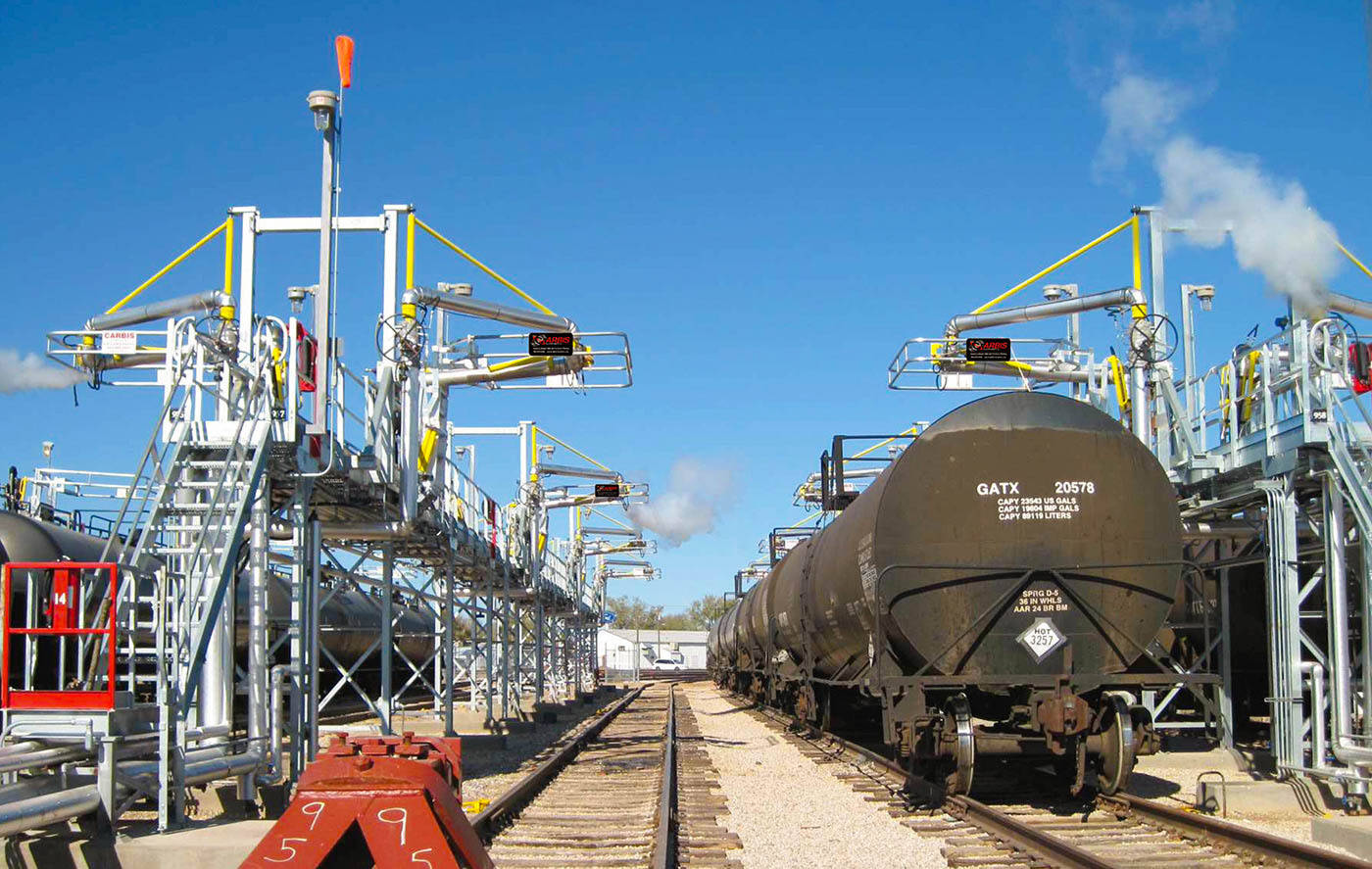
Custom gangways and platforms account for vehicle height, hatch spacing, and dock or vessel conditions specific to marine access. Existing obstacles like hoses or piping factor in too. This reduces awkward reaches and unprotected gaps. Equipment fits the site instead of forcing workers to adjust around it.
Combines Multiple Layers of Fall Protection Equipment
Cages, enclosures, and platforms work together as a coordinated system. Each layer reinforces the others instead of leaving isolated weak points. That layered approach closes gaps a single component can't cover alone.
Reduces Risk at Key Exposure Points
Fall risk is highest at hatch access and during product transfer. Proper equipment reduces fall risk exactly where workers need it most. Custom systems account for these exposure points from the start.
Improves Stability During Access and Product Transfer
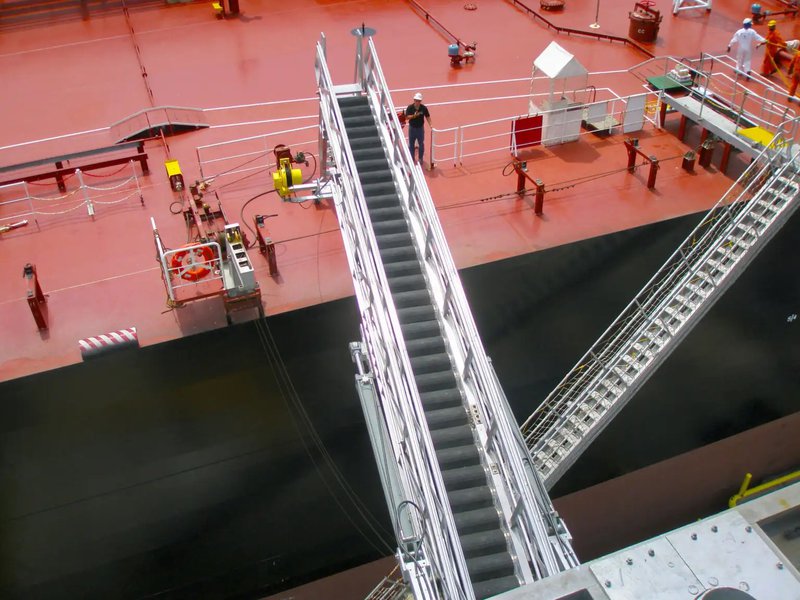
Custom platforms and gangways are engineered for steady footing, even on uneven or elevated surfaces. Guardrails and enclosures stay properly aligned with the vehicle being accessed. That stability reduces slips and missteps, not just falls from height.
How to Know If Your Facility Needs a Custom Solution
Not every facility needs fully custom access systems right away. Standard equipment can work fine for straightforward operations with consistent vehicle types and layouts. But as conditions change, that fit doesn't always hold up.
Certain signs make the need for a custom solution clear. Here's what to look for:
- Frequent near-misses or incidents. Recurring slips, trips, or close calls at loading points often signal that current equipment doesn't fit the site.
- Irregular vehicle types or sizes. Facilities that handle mixed fleets, varying hatch heights, or non-standard tank trucks often outgrow standard equipment quickly.
- New or expanding operations. Added loading bays, new product lines, or increased throughput can create access needs that existing equipment wasn't built for.
- Site obstacles limiting access. Piping, hoses, or loading arms that interfere with standard gangways or platforms are a common sign that a custom fit is needed.
- Upcoming compliance reviews. Facilities preparing for an audit or safety review often use it as a prompt to reassess whether current equipment meets today's standards.
If any of these sound familiar, it's worth having a closer look at your site. A short assessment can clarify whether a custom system makes sense for your operation.
Working With Carbis Solutions on Your Access System
Custom access systems make the difference between equipment that just meets code and equipment that truly protects workers. That difference matters most at the exact points where fall risk is highest. Getting it right takes more than a standard product.
At Carbis Solutions, we design gangways, safety cages, platforms, and enclosures built around your facility's specific conditions. Our team stays involved from site assessment through training, so your system fits and performs from day one. Contact us today so we can begin discussing how to ensure safer access and fall protection for your site.