A loading arm creates a controlled connection between a vehicle or vessel and a product supply line. It replaces manual hose handling with a controlled, mechanical connection. This reduces exposure to spills, vapors, and pressure hazards.
Facilities that move petroleum, chemicals, or food-grade liquids rely on these systems every day. When a loading arm fails or is used incorrectly, the consequences can be serious. Understanding the risks and how loading arms manage them helps operations teams protect workers and keep products moving safely.
Common Hazards During Fuel and Chemical Transfers
Product transfer is one of the riskiest parts of moving fuel and chemicals. The U.S. Chemical Safety Board's most recent volume of incident reports documented 30 serious chemical accidents nationwide, several tied to transfers between facility infrastructure and road or rail vehicles. Equipment failure and human error are common threads across these cases.
Several hazards show up again and again during fuel and chemical transfers:
- Hose and connection failures. Worn or improperly connected hoses can leak or rupture under pressure, releasing product and creating fire or exposure risks.
- Overfill and overpressure. Without proper controls, tanks can be overfilled or over-pressurized, leading to spills, ruptures, or explosions.
- Worker exposure to vapors and chemicals. Workers connecting or disconnecting equipment face direct exposure to fumes, splashes, or leaks.
- Falls from height. Accessing truck or railcar hatches often means climbing onto elevated platforms without proper fall protection.
- Manual handling strain. Maneuvering heavy hoses or connectors by hand increases the risk of muscle strain and repetitive injury.
Understanding these risks make it easier to prevent them. A single equipment failure or a moment of human error can trigger a chain reaction, putting workers and facilities at risk.
What a Loading Arm Does to Reduce Risk
Hose ruptures, overfill, and manual handling strain share a common cause: uncontrolled, manual product transfer. A loading arm is engineered to close that gap. It manages the connection, flow, and disconnection process with mechanical precision instead of relying on manual hose handling alone.
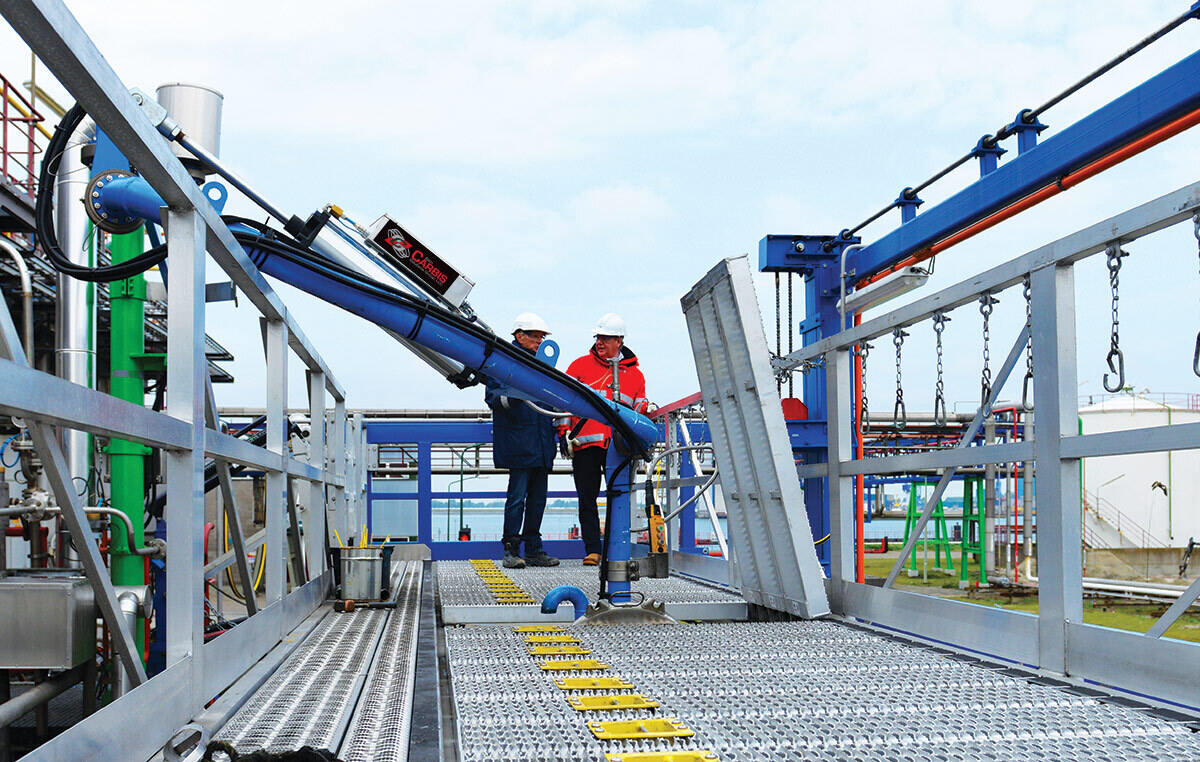
The right setup does more than connect two points. It builds safety into every step of the transfer process. Choosing the right loading arm for your operation makes a measurable difference in how well it performs over time.
Here is how a loading arm actively reduces risk during transfer:
- Stops product flow automatically. Emergency disconnects and safety breakaways shut down flow within seconds if a connection fails or separates unexpectedly.
- Prevents dangerous pressure buildup. Pressure switches and settled valves monitor conditions in real time and halt transfer before overpressure becomes a hazard.
- Keeps operators clear of strain and exposure. Counterweighted, easy-to-maneuver arms let operators connect and disconnect without lifting or wrestling heavy hoses.
- Reduces the chance of a bad connection. Adjustable reach and height accommodate different vehicle types, so operators are not forced to force a mismatched fit.
- Signals problems before they escalate. Accessible inspection points make it easy to catch worn seals or valves during routine checks, before they cause a failure.
Together, these actions make product transfer more predictable and controlled. Workers spend less time exposed to hazards, and facilities gain equipment that performs reliably for years.
Best Practices to Ensure Safe Loading Arm Usage
Equipment alone does not guarantee safety. You need clear programs in place to support the people using it. The right combination of training, maintenance, and oversight keeps loading arm operations safe over the long term.

A few practices make the biggest difference across facilities that handle fuel and chemical transfers:
- Formal operator training. Workers should be trained on proper connection, disconnection, and emergency shutdown procedures before operating a loading arm unsupervised.
- Routine equipment inspections. Scheduled checks of seals, valves, and connection points catch wear before it leads to failure.
- Documented standard operating procedures. Clear, written procedures for each transfer type reduce reliance on memory and lower the chance of human error.
- Site-specific hazard assessments. Facilities should evaluate the unique risks of each loading area, since needs vary widely by product type and vehicle.
- Ongoing safety audits. Regular internal reviews help identify gaps in training or equipment before an incident occurs.
These practices apply across transfer methods, including tanker truck transloading, where consistent procedures are especially important given the variety of products and vehicles involved. Facilities that build these habits into daily operations create a safer, more consistent environment for workers.
Partner With Carbis Solutions for Safer Product Transfers
Reducing risk during fuel and chemical transfers takes the right loading arm and the right practices behind it. Together, they protect workers and keep operations running smoothly.
At Carbis Solutions, we design loading arms and safety systems built around your specific operation, backed by site assessments, hazard analysis, and hands-on training. Our team stays involved from early planning through long-term support. Talk with our team today and let’s discuss your facility’s loading arm needs.