
Loading, unloading, and tarping of flatbed trucks all happen at height, often on uneven surfaces with limited handholds for stability. That combination creates real fall risk for workers every day, which is why flatbed truck fall protection deserves careful planning.
The right system depends on how your site actually works. Load heights, tarping frequency, and site layout all shape what fits. When the system matches the workflow, workers use it consistently and stay protected.
The Importance of Finding the Right Access System
A flatbed fall protection system isn't something you replace every year. Once it's installed, it's often in place for a decade or more, which means the decision carries weight well beyond the initial purchase. Getting it wrong is expensive to fix and hard to undo.
That's why workflow should drive the decision, not the other way around. A system chosen off a spec sheet alone may check the right boxes on paper but still miss how your site actually runs. One built around your trailer heights, tarping frequency, and pace of product transfer is far more likely to hold up over years of daily use.
Choosing the right flatbed truck fall protection system matters for a few key reasons:
- It determines its utility. Equipment that doesn't fit the workflow slows workers down, so they find workarounds. A well-matched system fits naturally into the job, which means workers actually use it every time.
- It reduces avoidable risk. A system that doesn't match how work actually happens can force workers into awkward positions or skipped steps. That kind of mismatch shows up often enough that the Occupational Safety and Health Administration (OSHA) lists fall protection as its most frequently cited safety standard.
- It protects your investment. These systems are capital purchases. Choosing equipment that matches your operation now and can adapt as it grows protects that investment long term.
- It keeps operations moving. A mismatched system creates its own bottlenecks, whether that means workers waiting on equipment to reposition or taking extra steps to work around a poor fit. The right match keeps loading and product transfer running at a natural pace.
Finding that fit starts with understanding your workflow, not just your equipment options.
How to Assess What Kind of Access Systems Fit Your Workflow
Before comparing flatbed truck fall protection systems, it helps to assess how work actually happens on your site. A few factors define your workflow and shape what kind of system will actually fit it.
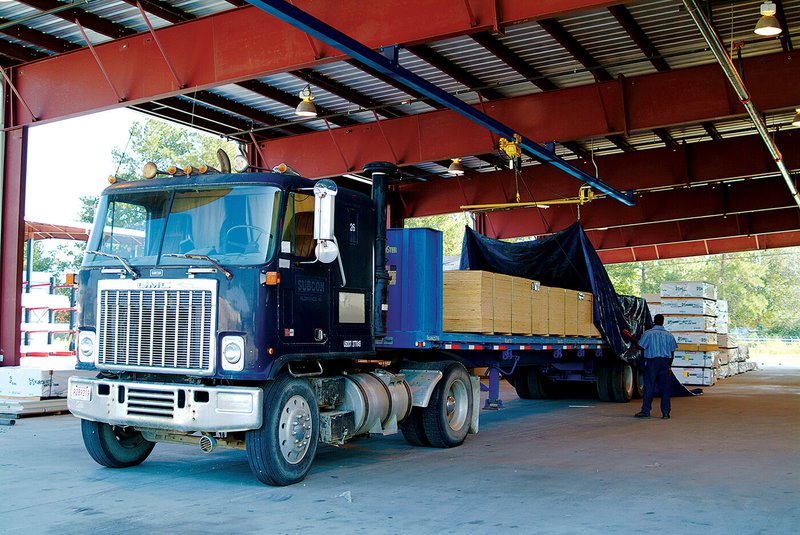
- Trailer and load variability. Some sites handle one type of flatbed at a consistent height. Others see a mix of trailers, load sizes, and configurations throughout the week. This variability affects how much flexibility your access system needs to have.
- Frequency and pace of product transfer. A site handling a handful of trucks a day operates differently than one running continuous shifts. Pace affects how quickly workers need to get into position and how much time a system can reasonably add to each load.
- Worker tasks and sequence. Tarping is often the main task, but workers may also sample, inspect, or strap loads in the same visit. These are common fall risks in industrial working-at-height tasks. The number of tasks, and the order they happen in, determines how long workers stay at height and how much access they need at once.
- Site layout and traffic flow. How trucks queue, park, and move through your site affects where and how access equipment can be positioned. A site with multiple trucks moving through at once has different layout needs than one handling a single bay.
Assessing these factors first gives you a clear picture of what your workflow actually requires before you start comparing individual systems.
Key Features to Look for in a Flatbed Truck Fall Protection System
Once you have assessed your workflow, you can use it to prioritize the features you need in a flatbed truck fall protection system. Not every feature below will matter equally at every site. However, they should help you narrow down what you should look for in a flatbed truck fall protection system:
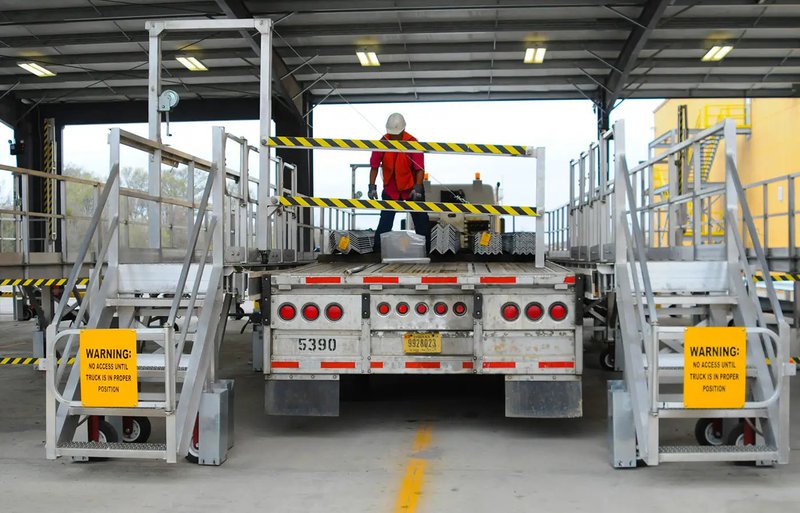
- Adjustable height range. This matters most for sites with variable trailer heights or a mixed fleet. If your trailers are consistent, a fixed-height platform may serve just as well.
- Guardrails and secure walking surfaces. This is a baseline requirement across nearly every site, since it directly addresses slips, trips, and falls during tarping or load inspection. Loading and unloading remain among the most common settings for these incidents, which is why this feature carries weight regardless of workflow.
- Fast, repeatable setup. Features like push-button operation or swing gates matter most at high-frequency sites, where saving even small amounts of time per load adds up.
- Durable materials suited to your environment. Aluminum, galvanized steel, and powder-coated steel each hold up differently. The right choice depends on weather exposure and site conditions.
- Flexibility for different tasks. If workers only need to tarp loads, a single-purpose system may be enough. Sites where workers also sample, inspect, or strap loads benefit more from a system built for multiple tasks.
- Room to scale. This matters most if you expect volume or fleet changes ahead. Sites with stable, predictable operations may not need to prioritize it as heavily.
Treat this list as a starting point for prioritization, not a checklist every system needs to satisfy in full. The features that matter most are the ones that match what you assessed about your own workflow.
Building Fall Protection Systems for Your Workflows
Flatbed truck fall protection works best when it's built around how your site actually operates, not a generic spec sheet. Trailer heights, workflow pace, and site layout all shape what a system needs to deliver.
At Carbis Solutions, we design gangways, platforms, and tarping systems around those exact factors and stay involved from site assessment through installation. Connect with our team to start building a solution suited to your workflow.