Getting workers safely to truck and tanker hatches is one of the toughest parts of loading operations. Climbing on curved, wet, or uneven surfaces raises the odds of a serious fall. Platform access changes that equation by giving workers a stable surface to stand on.
Platform access reduces fall risk by giving workers a stable, protected surface instead of requiring them to work directly from truck or tanker surfaces. This article breaks down the specific ways it protects workers during product transfer. Each section looks at a different part of the loading process where platform access makes a real difference.
Proper Platform Access Keeps Workers Off Truck and Tanker Surfaces
Trucks and tankers typically have no safe standing surface for workers reaching hatches at height. Curved tanks, wet metal, and narrow catwalks turn a routine task into a hazard every shift. Platform access solves this problem by giving workers a fixed surface built for the job.

Platform access keeps workers off vehicle surfaces through a few key design approaches:
- Bridging the gap to the hatch. Gangway extensions connect the platform directly to the vehicle, so site personnel step across instead of onto the tank surface.
- Positioning platforms to the correct spot. Truck spotting systems help align vehicles accurately, so workers are not left reaching or leaning to close a gap.
- Covering multiple hatches from one structure. Multi-spot platforms let personnel access several hatches without moving onto the vehicle between them.
Keeping workers off truck and tanker surfaces removes one of the biggest fall triggers on any loading site. As a result, sites pairing platforms with fixed and portable gangway options gain a safer setup for changing fleets.
Guardrails and Enclosures Protect Workers During Product Transfer
Product transfer often keeps workers stationed at height for extended periods near open hatches. A stable platform alone does not remove every risk once workers reach that height. Guardrails and enclosures close that gap by creating a physical barrier along exposed edges.
Federal safety standards set a clear baseline for protecting workers at height. Specifically, the Occupational Safety and Health Administration (OSHA) requires fall protection on work surfaces four feet or more above a lower level. Building on that baseline, guardrails and enclosures protect workers in several distinct ways during product transfer.
- Containing movement near open hatches. Site personnel can reach or lean toward a hatch without stepping past a protected edge.
- Removing exposed gaps at access points. Personnel stay protected as they transition from ladders or stairs onto the platform.
- Maintaining protection during longer tasks. Workers stationed at height for extended product transfer stay covered on all sides.
- Closing openings automatically. Site personnel never leave an entry point exposed once they step onto the platform.
- Keeping tools and equipment contained. Workers avoid the added hazard of items falling from height during transfer.
Guardrails and enclosures turn a platform into a fully protected work area, not just a stable surface. This kind of barrier addresses many of the truck loading safety gaps that leave workers exposed during longer tasks.
Platform Access Standardizes Safety Across Different Trucks and Drivers
Trucks and tankers arrive at loading sites in different shapes, heights, and configurations. Some drivers park with precision, while others struggle to spot in the correct position. Every variation creates a new set of conditions that site personnel must adapt to on the spot.
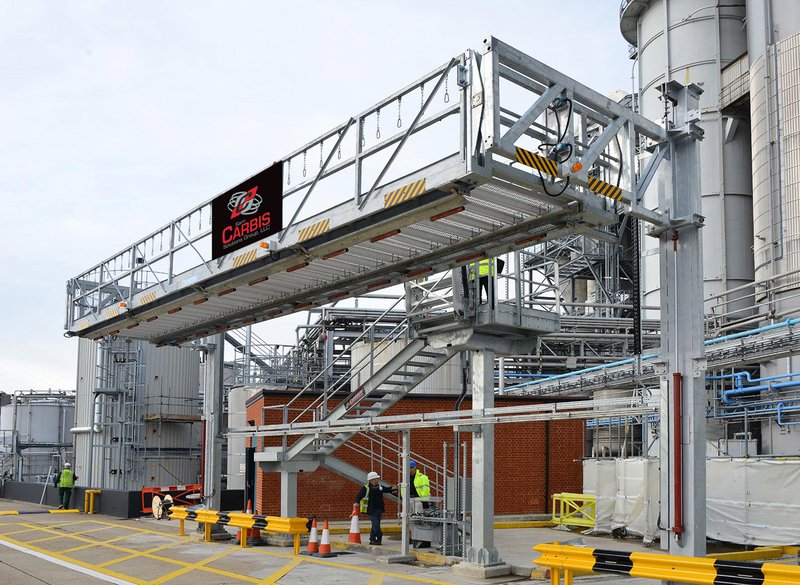
Platform access removes much of that variability by applying the same safety setup regardless of the vehicle. A few specific factors show how platform access keeps safety standards across different trucks and drivers:
- Applying one access point per spot. Site personnel use the same platform position no matter which truck pulls into the bay.
- Reducing dependence on driver accuracy. Personnel stay protected even when a truck is not spotted exactly on target.
- Covering a range of trailer heights. Workers get consistent access whether the vehicle is a small tanker or a tall hopper truck.
- Keeping the process the same across shifts. Personnel follow one procedure regardless of who is driving or which crew is on duty.
Standardizing access means safety no longer depends on how well a particular truck lines up. This matters most at sites with mixed fleets, where no two trucks arrive the same way.
Proper Access Provides Stable Footing in Bad Weather
Rain, ice, and snow turn ordinary loading tasks into serious safety concerns. Wet metal surfaces on trucks and tankers become slick within minutes of a storm starting. Low visibility during early mornings or winter months adds another layer of difficulty.
Proper access accounts for these conditions instead of relying on workers to compensate on their own. A well designed platform keeps footing stable no matter what the forecast brings. Several factors help proper access hold up when weather conditions turn difficult:
- Providing non-slip surfaces. Personnel keep solid footing even when rain or spilled product coats the platform.
- Offering covered work areas. Site personnel stay shielded from direct exposure to wind, rain, and snow during longer tasks.
- Maintaining stable footing at height. Workers avoid the added risk that comes with climbing wet or icy truck surfaces.
- Supporting visibility in low light. Personnel can see platform edges and access points clearly during early or overnight shifts.
Reducing worker exposure to harsh weather lowers the chance of a slip turning into a serious fall. Stable footing matters most when conditions are already working against the worker.
Build a Safer Way to Approach Truck and Tanker Loading
Platform access changes how workers reach hatches, handle guardrails, and stay steady in bad weather. Each of these elements works together to reduce risk throughout truck and tanker loading. A safer operation starts with equipment built around how workers actually move at height.
At Carbis Solutions, we design platform access solutions built for the demands of truck, rail, and marine loading sites. Our team works with you from early planning through installation, so your setup fits your operation. Reach out to us today to start building a safer loading process at your site.