Loading and product transfer at height can expose workers to fall risks, awkward reaches, and unstable footing. Without the right setup, these tasks put workers in harm's way every shift.
Elevated access solutions are built to meet those demands directly. They give workers stable footing and a controlled path to the work area. This article covers the key benefits these systems bring to loading operations.
Reduces Fall Risks at the Loading Point
Workers often need to reach hatches, valves, or ladders several feet off the ground. A single misstep during these tasks can lead to a serious fall. Elevated access systems reduce that risk by giving workers a stable, purpose-built route to elevated equipment.
Here is how these systems lower fall risk across a facility:
- Eliminates Improvised Access. Workers no longer need to climb on truck frames, ladders, or railcar ladders that were not built for repeated use. This dedicated access point replaces these makeshift routes.
- Keeps Footing Consistent. Platforms and gangways offer the same stable surface on every load. As such, workers do not have to adjust to different truck heights or railcar configurations each shift.
- Removes Unstable Footing Sources. Tailgates, worn steps, and temporary ladders wear down and shift over time. In contrast, a fixed or semi-fixed system replaces these with a stable, permanent surface.
- Limits Exposure Time at Height. Faster, safer access means workers spend less time navigating elevated areas. Less time at height means fewer opportunities for a fall to occur.
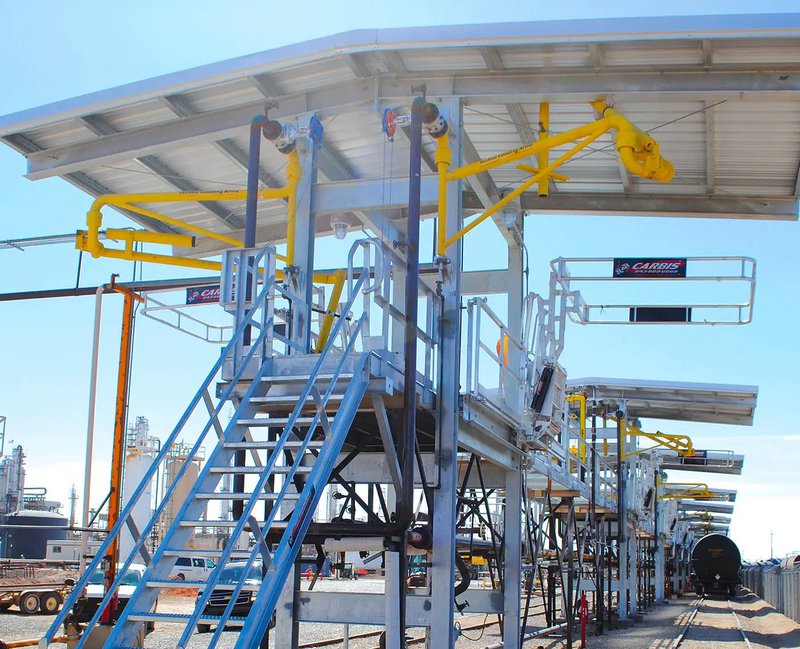
Proper equipment reduces fall risks across loading operations, from platforms to guardrails. This kind of investment builds a stronger safety culture at your facility.
Ensures Faster Turnaround During Loading
Loading delays add up fast when workers cannot reach trucks or railcars safely. Crews may pause work to reposition ladders or wait for a supervisor to check footing. Matching access solutions for fall protection to each vehicle type keeps loading on schedule.
Here is how these systems help operations move faster:
- Removes Setup Time. Fixed or semi-fixed platforms are ready before the vehicle arrives, so workers do not lose time setting up temporary equipment for each load.
- Keeps Crews on Schedule. Predictable, ready-to-use access lets teams plan loading windows without building in extra buffer time. This keeps throughput steady across shifts.
- Supports Continuous Operations. Stable, code-compliant access reduces the need for safety stops mid-shift. Loading can continue without repeated pauses for risk checks.
- Reduces Equipment Downtime. Durable systems require less frequent repair or replacement. As a result, facilities avoid the delays that come with unexpected equipment failure.
When loading moves faster, the entire facility benefits. Fewer delays mean better throughput without cutting corners on safety.
Optimizes Equipment Handling and Ergonomics
Reaching valves, hatches, or hoses without a stable platform strains the body over time. Awkward postures and repeated overextension add up across a shift. Elevated access reduces this strain by putting workers in a better position for every task.
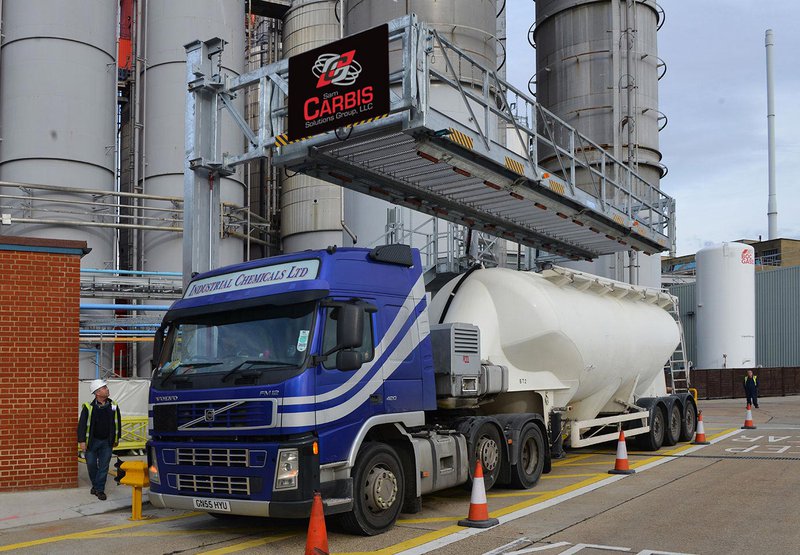
Here is how these systems improve posture and handling on the job:
- Positions Workers at the Right Height. Adjustable platforms bring workers level with the point of work. This removes the need to stretch, crouch, or twist during loading.
- Reduces Repetitive Strain. Consistent access points cut down on repeated awkward movements. As a result, workers do not need to compensate for uneven surfaces or shifting footing.
- Improves Load Handling Control. Stable platforms give workers better leverage when managing hoses, arms, or fittings. This lowers the risk of dropped equipment or sudden strain injuries.
- Addresses Vehicle-Specific Access Safety Challenges. Flatbed trailers, tank trucks, and railcars each demand different postures and reach patterns. Systems built for these differences reduce strain across vehicle types.
Musculoskeletal disorders account for about one-third of all worker injury and illness cases in the United States, according to the Bureau of Labor Statistics. Reducing strain at the point of loading directly addresses one of the most common causes of workplace injury.
Better ergonomics does more than prevent injury. It keeps workers steady and focused, which supports safer handling across the entire operation.
Strengthens Compliance and Long-Term ROI
Facilities that rely on outdated access methods face more than safety risks. Inspectors flag non-compliant equipment, and insurers take note of repeated violations. Elevated access systems help facilities meet safety standards while protecting the value of the investment over time.
Here is how these systems support compliance and long-term returns.
- Meets Recognized Safety Standards. Systems built to code reduce the risk of citations during inspections. This keeps facilities aligned with evolving regulatory requirements.
- Lowers Liability Exposure. Documented, compliant access equipment reduces the risk of claims tied to preventable incidents. In turn, this protects the facility from costly litigation and settlements.
- Extends Equipment Lifespan. Durable systems designed for industrial use hold up under repeated loading cycles. Consequently, this reduces the need for early replacement or major repairs.
- Supports Long-Term Budget Planning. Predictable maintenance needs make it easier to plan for upkeep. Facilities avoid the financial strain of unplanned equipment failure.
Compliance and ROI are not separate concerns. A system that meets industry guidelines today continues to pay off through fewer incidents and lower long-term costs.
Talk to Us for Elevated Access Solutions
Safe loading at height depends on stable, reliable access. Falls, strain, delays, and compliance gaps all trace back to how workers reach the point of work. Elevated access solutions address each of these challenges directly.
At Carbis Solutions, we design platforms, gangways, and safety cages built for truck, rail, and marine loading environments. We also provide site assessments and training to support safe use from day one. Contact us to talk through what your operation needs.