Spend enough time in the same plant and almost anything starts to look normal.
A step that’s a little higher than it should be. A gangway that doesn’t land quite where it used to. Drivers who pull forward, back up, and try again before they line up with the loading spot. People know the quirks. They’ve figured out the workarounds. After a while, nobody even mentions them, because that’s just how the job gets done.
That’s the tricky part of industrial safety. People are good at adapting. Experienced employees will find a way to make an imperfect setup work. Once everyone gets used to the workaround, it stops looking like a problem.
A site safety assessment is one way to catch that.
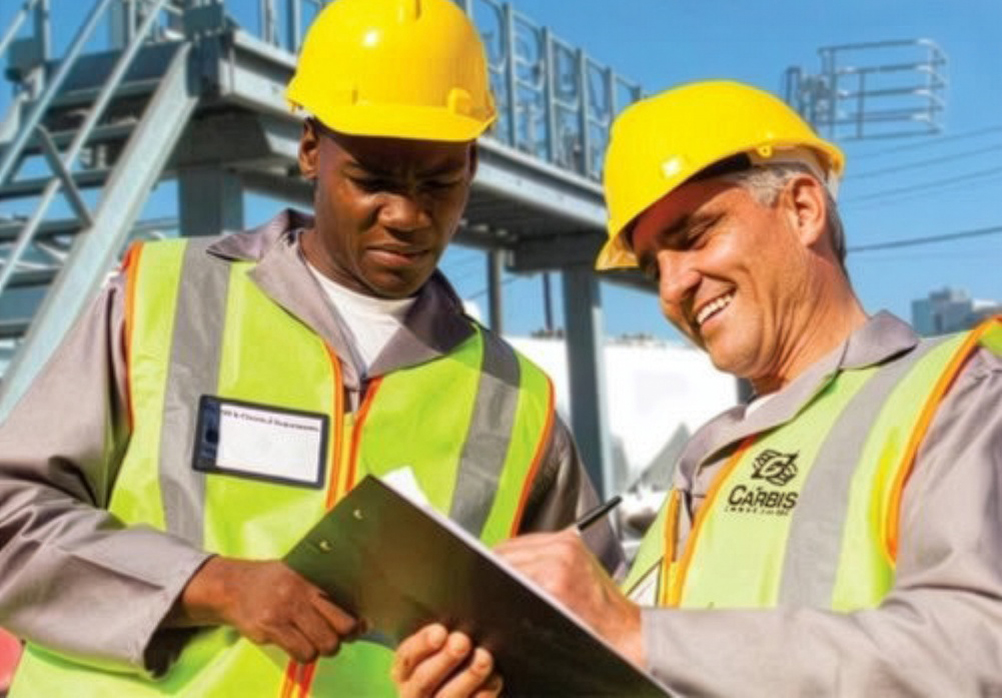
A good one isn’t someone walking around with a clipboard hunting for violations. It’s a chance to step out of the daily routine and watch how people actually move through the place: how they get to equipment, how they work from elevated areas, how they use the systems that are supposed to protect them.
If you handle tank trucks, railcars, loading, or elevated access, that outside look can turn up issues that have been sitting in plain sight for years.
“That’s how we’ve always done it”
There’s probably no phrase in industry more dangerous than that one. Sometimes the process really is fine. Other times, what everybody treats as normal started as a temporary fix that never went away.
A valve got moved during a process change, and now someone has to lean farther than they used to. A new style of truck started coming through, and the hatch doesn’t line up as well with the access system. Somebody added a piece of equipment to the platform, and the working space got tighter.
None of that looks like an emergency. The operation keeps moving. People adjust. Eventually nobody remembers the job used to be done differently. That doesn’t mean it’s fine.
One of the more useful things an outside assessment can do is ask why. Why is that employee stepping around the pipe? Why is the operator leaning outside the cage? Why does the driver have to reposition the truck three times before loading starts? Why are people hauling tools up a ladder when there’s another way to get them up there?
The answer tells you whether you’re looking at training, maintenance, equipment design, or a change in the operation itself. You can’t fix the right problem until you know what the actual problem is.
Facilities change more than we notice
Plants almost never stay the way they were designed.
Products change. Throughput goes up. New equipment shows up. Old equipment gets swapped out. Trucks and rail cars arrive in different configurations. A process that used to happen occasionally becomes part of the regular day.
The access system might still be the one that went in ten or fifteen years ago. That doesn’t automatically mean it’s unsafe or needs to come out. It does mean it’s worth asking whether it still fits the operation it’s serving.
A rack built for a narrow range of tank truck heights may now see a much wider mix. A rail platform that handled one car setup may now have to deal with several. A gangway can still operate fine and land in a worse spot, simply because the trucks or cars have changed.
Small changes add up too. A pipe gets rerouted. New controls go in. A loading arm moves. Instrumentation lands where people used to have clear walking space. None of those looks like a big deal on its own. Together, they change how people move through the area.
An assessment is a chance to look at the whole operation again, instead of assuming that because each change worked on its own, the combined result still works.
Access is a system, not a piece of equipment
It’s easy to look at a platform, a gangway, or a safety cage and decide it’s doing its job.
Employees don’t work on isolated pieces of equipment. They move through a system. They approach the loading area, climb the stairs, step onto the platform, transition onto the gangway, get onto the truck or railcar, connect the equipment, move around the work area, and eventually reverse the whole thing.
Every one of those transitions matters.
A platform can be in good shape and still create a problem if people have to cross an exposed area to reach it. A gangway can operate perfectly and still be poorly positioned for the vehicles coming through. A cage can protect someone at one spot and leave them exposed when they move a few feet to reach another hatch or connection.
That’s why the assessment has to follow the person through the task. Where do they start? Where do they go next? Where do they climb, step, reach, turn, or lean? Are they protected while they’re moving between pieces of equipment, or only once they get to the final work position?
Those transitions are often where the less obvious hazards show up.
Truck loading is worth a closer look
Tank truck loading and unloading packs a lot into a small area: vehicle movement, elevated work, changing vehicle dimensions, product transfer.
Start with positioning. If drivers routinely have to pull forward, back up, and try again before they hit the right spot, that’s worth looking at. Every extra move puts a large vehicle in motion around equipment and people, and it wastes time.
Once the truck is in place, look at how people get on it. Are the stairs and platforms where they actually need them? Does the gangway cover the range of truck heights coming through? Does it land somewhere useful, or does the employee still have to stretch, lean, or step outside the protected area to reach the hatch?
Same question for the cage or other fall protection. It shouldn’t only protect the employee where the gangway happens to land. It needs to cover where the employee is actually working.
Then look at everything else around them. Loading arms, hoses, grounding equipment, controls, piping. All of it takes up space. If it’s in the wrong place, people step over it, reach around it, or work from an awkward angle. None of those problems sits by itself. They shape how the whole loading operation runs.
Rail has its own version of this
Railcar access is often messier, because there’s more variation in where people need to work.
Cars differ in height, length, spacing, and hatch location. Depending on the site, employees may work one car at a time or several along the same track. If the access system doesn’t account for that, people end up reaching past the intended work area or repositioning equipment over and over.
Tracking gangways help in those situations, but they still have to be built around the actual range of cars. Travel, platform length, gangway reach, and cage layout all have to work together.
Multi-car work raises another question: what happens between positions? People may be moving along an elevated platform while working across several cars. Openings, gaps, and transitions matter as much as the work position itself.
And what happens when the track isn’t full? A system built for several cars still has to give safe access when only one or two are there. Empty positions shouldn’t create new exposure just because the operation isn’t running at capacity.
The clearest way to know whether it works is to watch how people actually use it.
Watch the work, not just the equipment
Drawings, measurements, and specs matter. They don’t tell the whole story.
Watch a truck come into the loading position. Does the driver line up easily, or is there a lot of jockeying? Watch someone move a gangway. Does it go smoothly, or does it take more effort than it should? Watch how they reach the connection. Is everything within easy reach, or is there a lot of stretching and leaning? Do they stay inside the fall protection the whole time?
You’ll notice things nobody thought to mention, because they’ve become part of the routine.
The people doing the job every day are usually the best source. They know which trucks are hard to get on. They know which gangway is harder to move, which area gets crowded, which task always seems to need an extra set of hands.
Not every complaint needs an engineering project. Sometimes it’s maintenance. Sometimes it’s training. Sometimes it’s a small modification. You won’t know until you ask. “What’s the hardest part of this job?” will surface things that never show up on a drawing.
“It still works” isn’t the same as “it works the way it should”
A gangway can still go up and down. If it takes two people to move it, that’s a problem. A tread can still be usable. If it’s worn smooth, it needs attention. A handrail can still be standing. Corrosion, loose connections, or damage can cut into what it’s actually doing for you.
Access equipment takes a beating. Weather, product residue, repeated movement, impact, vibration, years of use. Pivots, springs, bearings, and counterbalance systems need maintenance if they’re going to keep operating the way they should. Same for stairs, platforms, cages, handrails, and guardrails.
A decent assessment should separate what needs routine maintenance from what needs to be replaced or redesigned. Not every issue is a capital project. Sometimes a repair fixes it. Sometimes moving a piece of equipment improves the workflow. Sometimes an older system can be modified to fit what you’re doing now.
The point isn’t to replace everything that isn’t new. The point is to make sure the equipment is still doing the job safely.
If the safe way is the hard way, people will find another way
One of the quicker tells on a safety system is whether people actually want to use it.
If the safe method makes the job a lot harder, shortcuts show up. That doesn’t excuse unsafe behavior. It does tell you something about the system.
If a gangway is hard to move, people may not position it correctly every time. If a cage gets in the way of the work, people lean around it. If the proper access point is inconvenient, someone starts using a faster route.
The goal is to make the safe way the practical way whenever you can. Good access equipment doesn’t only provide fall protection. It should make the task easier to do the same way every time.
That’s also why safety and efficiency often move together. When people aren’t climbing around obstacles, repositioning equipment over and over, or stretching for a connection, the job is usually both safer and faster.
Standards move, even if the equipment doesn’t
Another reason to look at an older system is that expectations don’t stay frozen.
Equipment installed years ago may have been appropriate when it went in. Fall protection, access, guarding, and design practice may have moved since then. That doesn’t mean every older system is noncompliant or unsafe. It means it deserves a real look, not a shrug.
An assessment can flag where existing equipment should be compared with current requirements and accepted practice. From there, the facility can decide what needs attention now, what can wait for maintenance, and what belongs in a future upgrade. That’s a better conversation than the one that starts after an incident or an inspection.
Not every finding is equally urgent
One of the less useful things you can hand a facility is a long list with no sense of priority.
Some issues need attention now. Some can wait for scheduled maintenance. Some belong in capital planning. If one loading position has a serious access problem and another just needs a worn component replaced, those aren’t the same thing.
Sorting recommendations in that way gives operations, safety, maintenance, and management the same picture to work from. It also makes budgeting easier. Repairs can be scheduled. Modifications can line up with shutdowns. Bigger projects can go into future budgets instead of showing up as surprises.
At that point the assessment is more than a report. It’s a planning tool.
Safety and production aren’t usually opposites
There’s still a habit in some plants of treating safety improvements as something that slows the work down.
Poor access usually wastes time. A truck that has to reposition three times. An employee who has to wait for help to move equipment. Someone who climbs down and back up because the connection can’t be reached safely. Those delays add up.
Better access cuts unnecessary movement, simplifies positioning, and makes the task more consistent from one person to the next. A platform that fits the work reduces climbing. A tracking gangway handles changing railcar positions. Better spotting cuts repeated truck movement. Equipment in the right place makes connections easier to reach.
None of that trades production for safety. It improves both.
An assessment should lead somewhere
The point isn’t a thick report that gets filed and forgotten.
What’s working? What isn’t? Where are people exposed to risk they don’t need to be? Which problems can be handled with maintenance, and which ones may need an engineered fix?
The recommendations also have to fit the real operation. Plants don’t have unlimited space or unlimited budgets. Existing piping, structures, traffic patterns, and production requirements all have to be part of the answer.
Sometimes the fix is a new access system. Sometimes it’s modifying a platform that’s already there. Sometimes it’s adding fall protection, repairing a gangway, changing how a truck is spotted, or moving a piece of equipment that’s in the way. There isn’t one answer that fits every site. The right one starts with how the work is actually being done.
When it’s worth another look
There’s no date on the calendar that says a facility is due for an assessment. There are some decent reasons to take one.
The operation has changed. You’re handling different trucks or railcars. Production has gone up. New equipment has been added around an existing access system. People are regularly working around something: stepping around equipment, stretching past protected areas, struggling to move gangways, repositioning vehicles over and over.
Expansion is another good moment. Before you add a loading position or push more throughput through, it’s worth knowing whether the access system can support it.
And sometimes the reason is simpler. The equipment has been there for years, everyone is used to it, and nobody has looked at it with fresh eyes in a long time. That’s reason enough.
Sometimes you just need another set of eyes
The hardest hazards to see are the ones people walk past every day. They fade into the background. Employees adapt. Supervisors get used to them. Eventually the workaround feels as normal as the original process.
An assessment is a chance to reset that. Watch how people actually get onto trucks, railcars, platforms, and gangways, and you can see where the system still fits and where the operation has outgrown it.
At Sam Carbis Solutions Group, we’ve spent decades designing access and fall protection around how industrial work actually gets done. During an assessment, that matters. We’re not only checking whether a platform or gangway is there. We’re looking at how the operation fits together, and whether people can do the job safely and without a lot of extra friction.
Sometimes the answer is new equipment. Sometimes it’s a repair or a modification. Sometimes the value is catching a problem before it becomes an incident. And sometimes the first step is just having someone walk the site and ask a question nobody has asked in a while: does this still work the way we need it to?
More on site safety assessments and engineered access solutions at www.carbissolutions.com.